
Texas Roof Payment Schedules and ACV Roof Coverage: How Hail Claims Really Get Paid
A plain-English guide for Texas homeowners on the roof terms that quietly decide the size of a hail or wind check: replacement cost, actual cash value roof endorsements, roof payment schedules, and cosmetic damage exclusions, plus what to check at renewal before the next storm.
Why the roof line on your policy matters so much in Texas
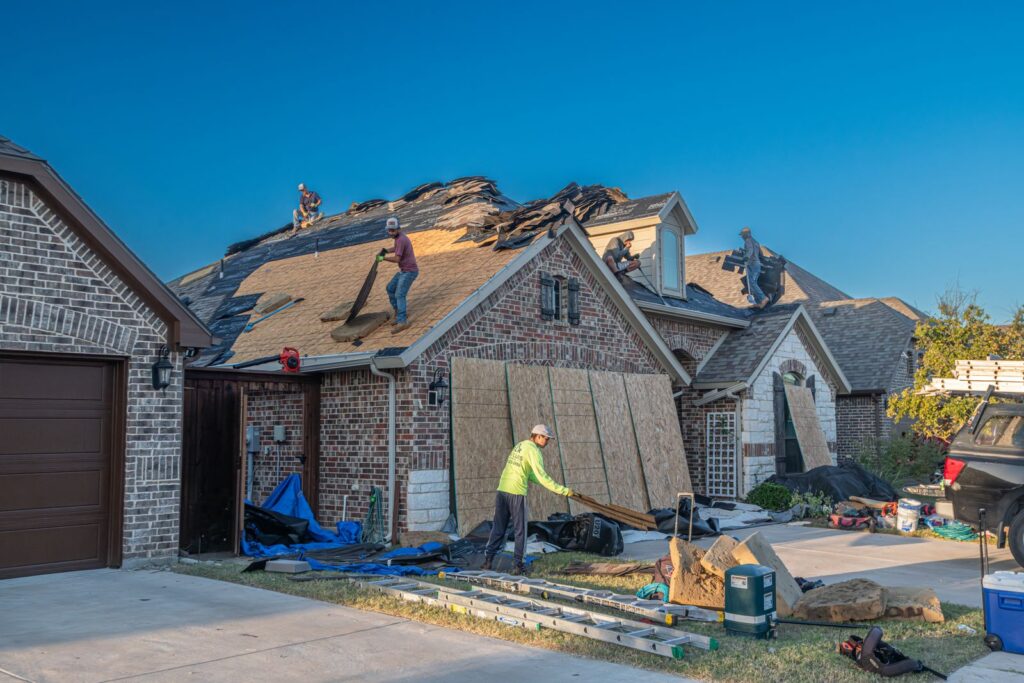
For a lot of Texas homeowners, the roof is the single most likely big claim they will ever file. Hail and wind storms move through the state every year, and a full roof replacement is one of the most expensive repairs a house can need. That is exactly why insurers pay so much attention to how a roof is valued, and why two policies with the same dwelling limit can pay very different amounts for the same storm.
Most people shop home insurance by looking at the premium, the dwelling limit, and the deductible. Those matter. Our guide to Texas wind and hail deductibles walks through percentage deductibles in detail, and our Coverage A and rebuild cost checklist covers whether the dwelling limit keeps up with construction costs. This article covers the piece that sits between those two: the rule your policy uses to decide what a damaged roof is worth before the deductible ever comes off.
Three ways a Texas home policy can pay for a roof
Home policies and endorsements differ by company, but roof settlement usually falls into one of three patterns. Knowing which one you have is the first step to reading any roof claim estimate.
A single policy can combine these. For example, a home might have replacement cost on the house overall, a roof payment schedule that applies only to wind and hail damage to the roof surface, and a cosmetic exclusion on a metal roof. The declarations page and endorsement list tell you which pieces are in play.
Depreciation in plain English, and the Texas ACV rule
Depreciation is the reduction in value for age, wear, and condition. A ten-year-old shingle roof is not worth what a brand-new one costs, so an actual cash value settlement subtracts some amount for the years already used. The National Association of Insurance Commissioners describes actual cash value coverage as paying based on the property’s value considering age and wear and tear, and notes that it often does not pay enough to fully replace the property. Replacement cost, by contrast, pays to repair or replace with materials of like kind and quality.
How much depreciation an adjuster applies depends on the roof’s material, age, expected life, and condition, and on the company’s estimating practices. That is why ACV roof claims can turn into disagreements: the depreciation figure involves judgment, and on an older roof it can be a large share of the estimate.
What actual cash value is not allowed to include in Texas
Texas has a specific position on one common dispute. In a 1998 bulletin, the Texas Department of Insurance stated that actual cash value under a replacement cost residential policy is the replacement cost with a proper deduction for depreciation, and that also deducting prospective contractor’s overhead and profit or sales tax on building materials is improper. In practical terms, when you review an ACV figure on a roof estimate, the reduction should be depreciation, not a second haircut for contractor markup or tax. If an estimate looks like it removed those items, ask the adjuster to explain the line in writing.
A worked example: one storm, three different checks
The numbers below are example figures only, chosen to make the math easy to follow. They are not a quote, a company’s actual table, or a prediction of any claim. Real estimates, depreciation, schedule percentages, and deductible rules vary by policy.
Assume a home with a $350,000 dwelling limit and a 1% wind and hail deductible, which works out to $3,500. A hailstorm damages the asphalt shingle roof badly enough that a full replacement is estimated at $20,000. For this example, assume the adjuster’s depreciation on the twelve-year-old roof is $9,000, and that a sample payment schedule pays 50% for a shingle roof of that age.
| Roof settlement | Roof value used | Minus deductible | Example payment |
|---|---|---|---|
| Replacement cost, after repairs are completed | $20,000 | $3,500 | $16,500 (often paid as a first check plus withheld depreciation) |
| Actual cash value roof endorsement | $11,000 ($20,000 minus $9,000) | $3,500 | $7,500 |
| Sample roof payment schedule at 50% | $10,000 | $3,500 | $6,500 |
Same house, same storm, same deductible, and the difference between the best and worst outcome in this example is $10,000. That gap is the real cost of a roof endorsement, and it is the number to weigh against the premium savings the endorsement offered when you bought it.
Two details often surprise people. First, a percentage deductible is figured on the dwelling limit, not on the smaller roof payment, so it does not shrink when the roof is valued lower. Second, the order in which a company applies the schedule, depreciation, and deductible is set by the policy wording. The example above takes the deductible off the reduced roof value, which is a common way to illustrate it, but your form controls.
What usually stays at full value, and what may not
Roof endorsements are narrower than many homeowners assume, which can work in your favor. Consumer guides from carriers and industry writers describe common features, but always confirm them against your own endorsement:
- The peril may be limited. Many roof schedules and ACV roof endorsements apply only to wind and hail losses. A roof damaged by fire or a falling tree may still settle under the policy’s normal terms.
- The part of the house may be limited. On many forms, only the roof surfacing gets the reduced settlement. Interior damage from water that came through the roof, such as drywall, insulation, and flooring, usually settles the way the rest of the policy does. Whether decking, underlayment, and flashing count as “roof surfacing” varies by form.
- The material may change the math. Schedules often have separate columns for shingle, metal, and tile, with longer-lasting materials losing value more slowly.
- Other structures may have their own terms. Roofs on detached garages, barns, and sheds fall under other structures coverage, explained on our Texas other structures insurance page, and the endorsement may or may not reach them.
Rental homes deserve their own look. Dwelling fire policies for landlords, such as the special form described on our Texas DP-3 insurance page, can carry roof terms that differ from the owner’s primary home policy, so check each property separately.
Cosmetic damage exclusions and metal or impact-resistant roofs
Hail does not always break a roof. Small or moderate hail can dent metal panels or mark shingles without opening a path for water. The National Severe Storms Laboratory notes that hail the size of a quarter, about one inch across, or larger is considered severe, but plenty of storms produce damage that is visible without being functional.
A cosmetic damage exclusion draws a line between those two outcomes. Texas has long had a version of this idea: a 1998 TDI bulletin described an optional endorsement excluding cosmetic hail damage to roof coverings on homes that were receiving a premium credit for an impact-resistant roof meeting UL Standard 2218. Its wording excluded damage that only alters the physical appearance of the roof covering, while still covering hail damage that lets water through or causes the roof covering to fail at its intended job of keeping out the elements over time. Today many companies use their own filed endorsements, and some apply specifically to metal roofs, so the definitions and triggers vary.
Why the wording matters
The whole claim can turn on whether damage is “cosmetic” or “functional.” Dents on a standing seam metal roof may be cosmetic under one form, while cracked seams, punctures, or loosened fasteners are more likely functional. If your roof is metal or impact-rated, find out whether a cosmetic exclusion is attached, what it covers, and whether accepting it came with a premium credit you are actually receiving.
How to find your roof terms at renewal
Roof terms often live in endorsements rather than on the first page of the declarations. The Texas Department of Insurance advises homeowners to check for changes to roof coverage at renewal, noting that as roofs age, some companies switch to actual cash value, and that a company should tell you when it changes your coverage. Here is a practical way to look:
- Pull the full renewal packet, not just the bill. You want the declarations page and the list of forms and endorsements.
- Scan the endorsement titles for phrases like roof surface payment schedule, roof surfacing, actual cash value roof, loss settlement, or cosmetic damage.
- Read the schedule table if there is one. Find the row for your roof’s age and the column for its material, then note the percentage for this year and next year.
- Confirm the roof year the company has on file. If the record shows an older roof than you actually have, your percentage or eligibility may be wrong. Send proof of the replacement.
- Compare against last year. If the endorsement is new, ask whether it was added because of roof age, a company-wide change, or a change in your discounts.
If a company declines or drops coverage, that is a different issue from how a claim is paid. Our guides to Texas homeowners cancellation and nonrenewal and the roof-age rule proposal in our October 2026 Texas insurance news roundup cover the eligibility side.
Is the premium savings worth it?
Roof endorsements exist because they lower premiums, and for some homeowners that trade makes sense. United Policyholders, a consumer advocacy group, has been critical of the move toward ACV roof coverage, pointing out that the out-of-pocket difference after a claim can be large. Neither choice is automatically right. The honest answer depends on your roof, your budget, and how long you plan to keep the roof.
To compare fairly, ask for quotes both ways when a company offers the choice, and translate the difference into dollars per year. Then run a quick what-if: if the roof needed replacing this year, how much more would you pay out of pocket under the endorsement? If that number would be a hardship, the cheaper premium may not be the better deal.
Replacing your roof: materials, proof, and possible credits
A roof replacement is the best moment to improve how the roof is insured. Many companies treat a new roof differently on schedules, eligibility, and discounts, and some offer credits for impact-resistant materials. Our guide to new roof home insurance savings lists the paperwork that usually helps.
What “impact-resistant” actually means
UL 2218 is a standard test that drops steel balls of increasing size onto roofing samples, with Class 4 the highest rating. The Insurance Institute for Business and Home Safety (IBHS) has noted that standardized tests do not exactly replicate natural hailstones, and it runs its own tests using laboratory-made hailstones on products bought through normal retail channels. In its 2025 update, IBHS said most impact-resistant shingles it tested earned a “Good” rating and none earned “Excellent.” The takeaway is that a Class 4 label is useful, but it is not a promise that hail will never damage the roof, and the exact product matters.
IBHS also runs the FORTIFIED Home program, a construction standard aimed at strengthening roofs against severe weather. If you are re-roofing anyway, ask your roofer about it and ask your agent whether any carrier you are considering gives credit for it.
Paperwork to keep
- The signed contract and final invoice showing the completion date
- The product name and its impact rating documentation, if any
- Any permit or inspection records, and for coastal properties any windstorm compliance paperwork
- Dated photos of the finished roof from several angles
Send copies to your agent. Some companies schedule an inspection after a change like this; our article on why an insurance company inspects your house explains what they usually look for.
After a hail storm: reading the roof estimate
When a storm hits, the roof terms you checked at renewal turn into real numbers. A few habits make the process clearer:
- Find the valuation lines first. Look for the replacement cost total, the depreciation amount, whether depreciation is labeled recoverable or non-recoverable, any schedule percentage, and the deductible.
- Understand the first check. On replacement cost coverage, the first payment is often the actual cash value minus the deductible. The withheld depreciation is typically released after you complete the repairs and submit proof, such as the contract, invoice, and photos.
- Watch the time limits. Policies set deadlines for completing repairs and requesting withheld depreciation, and Texas law sets its own claim-handling timelines. Our guide to Texas hail and wind claim deadlines covers those dates.
- Ask before you sign off. If you think the estimate is short, ask the company whether a check is a partial payment or a final settlement before you endorse it, and send your contractor’s estimate with a short written explanation of the differences.
- Document everything. Photos of the damage before any repairs, notes on every call, and copies of every estimate make supplements and disputes much easier.
Quick checklist before the next storm season
- I know whether my roof is insured at replacement cost, actual cash value, or on a payment schedule.
- I know whether that roof rule applies only to wind and hail, or to all perils.
- I have looked up my roof’s row on any schedule table for this year and next year.
- I know whether a cosmetic damage exclusion is attached, especially on a metal or impact-rated roof.
- The company has the correct roof year and material on file.
- I know my wind and hail deductible in dollars, not just as a percentage.
- I have estimated my out-of-pocket cost if the whole roof needed replacing this year.
- I have priced the policy with and without the roof endorsement, where the company offers that choice.
How Texas Insurance Resources helps
We read the roof endorsements, not just the premium, when we compare options for Texas homeowners. That means checking how each quote values the roof, whether a cosmetic exclusion is attached, and how the wind and hail deductible plays with the roof terms, so you can see the real trade-off before you choose. You can explore more on our Texas home insurance page, browse the personal insurance category for related guides, or learn more about us.
When you are ready, start on our quote page or call us with your current declarations page and the year your roof was installed. This article is educational; your policy forms, endorsements, and the facts of a claim control actual coverage.
Not sure how your roof is insured?
Send us your renewal packet and roof year, and we will help you find the roof terms, run the what-if, and compare options before the next hail season.
Sources
- NAIC: What’s the difference between actual cash value coverage and replacement cost coverage?
- NAIC: A Consumer’s Guide to Home Insurance (PDF)
- Texas Department of Insurance: Insurance and your roof
- Texas Department of Insurance Bulletin B-0045-98: Actual cash value under replacement cost policies
- Texas Department of Insurance Bulletin B-0030-98: Cosmetic hail damage endorsement for roof coverings
- United Policyholders: Roof insurance, ACV versus replacement cost
- Kin Insurance: What is a roof surface payment schedule?
- PropertyCasualty360 FC&S: Roof surfacing cosmetic damage exclusion
- Sample endorsement: Exclusion of cosmetic loss or damage to metal roof coverings caused by hail (PDF)
- IBHS: 2025 impact-resistant shingle ratings
- IBHS: Relative impact resistance of asphalt shingles, UL 2218 testing (PDF)
- IBHS FORTIFIED Home program
- NOAA National Severe Storms Laboratory: Hail basics
Get a free Texas home insurance quote
Ready for numbers? Fill out the short form below and a licensed Texas agent will compare carriers for you. It takes about two minutes, there is no obligation, and we never sell your information. Prefer the phone? Call 800-875-4711.