
Home / Blog / Texas Hail and Wind Claim Deadlines: What Chapters 542 and 542A Mean for Homeowners
Texas Hail and Wind Claim Deadlines: What Chapters 542 and 542A Mean for Homeowners
Texas hail and wind claim deadlines are two different clocks. Chapter 542 times how a carrier must acknowledge, decide, and pay. Chapter 542A changes the presuit notice, the inspection, and the attorney-fee math if a weather claim becomes a lawsuit.
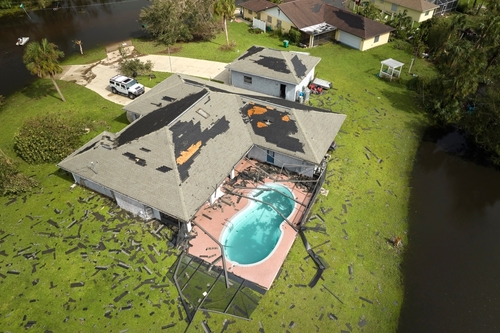
A map of the prompt-payment statute and the weather-claim lawsuit rules, for homeowners.
Two chapters, two jobs
After hail or wind, the practical questions come first. When must the carrier acknowledge the claim, decide it in writing, and pay an amount it has accepted? Those dates are Insurance Code Chapter 542, Subchapter B. If the dispute is headed to court, a second statute asks how far ahead notice must go, whether the carrier can inspect again, and how attorney fees are limited. That is Chapter 542A, effective for covered actions on September 1, 2017.
Chapter 542 sets the handling deadlines and, if the insurer is liable on the policy and misses the subchapter, statutory interest. Chapter 542A does not repeal those deadlines. It adds the presuit steps and a different interest and fee formula when the lawsuit is about a weather claim. Deductible math is a different article, in our guide to Texas wind and hail deductibles. Dwelling limits are covered in Coverage A and rebuild costs at renewal.
What counts as a claim, and as notice
Section 542.051 defines a prompt-payment “claim” as a first-party claim the insurer must pay directly to the insured, policyholder, or named beneficiary. A “notice of claim” is “any written notification provided by a claimant to an insurer that reasonably apprises the insurer of the facts relating to the claim.” A phone call can open a file. The statutory notice is written. A “business day” is “a day other than a Saturday, Sunday, or holiday recognized by this state.” Some deadlines use that term and some do not. Counting them all the same way will mis-date the file.
Section 542.054 says the subchapter “shall be liberally construed to promote the prompt payment of insurance claims.” That is a reading rule, not a coverage grant. Deductibles, exclusions, and the policy’s proof requirements still decide whether money is owed. The subchapter reaches admitted homeowners carriers and, on a longer clock, eligible surplus lines insurers. It does not apply to the lines carved out in Section 542.053, such as workers’ compensation and title insurance.
The opening 15 days, then a written decision
Section 542.055 is the first response. Not later than the 15th day after notice, an admitted insurer shall acknowledge the claim, start any investigation, and request the items it reasonably believes it will need. Weekends count. That period is not “15 business days.” An eligible surplus lines insurer gets the 30th business day. If the acknowledgment is not written, the insurer must record the date, manner, and content. Later requests are allowed when the investigation shows they are necessary.
Once those required items are in, Section 542.056 starts a new count. Except for the arson and extra-time rules, the insurer must notify the claimant in writing of acceptance or rejection not later than the 15th business day after it receives all items, statements, and forms required to secure final proof of loss. This one is business days. A rejection must state the reasons. A one-line denial with no explanation does not match Section 542.056(c). Keep that letter. It tells you whether the fight is coverage, scope, the deductible, late notice under the policy, or missing paper.
If the insurer has a reasonable basis to believe the loss resulted from arson, the written decision is due not later than the 30th day after it receives the required items. That arson period is days, not business days. If the insurer cannot accept or reject inside the period that applies, it must, inside that same period, explain why it needs more time. It then must accept or reject not later than the 45th day after the date of that extra-time notice. Silence is not the extra-time procedure.
Section 542.056: More time is available only if the carrier says why, inside the original decision window. The follow-up accept-or-reject date is the 45th day after that notice.
Payment, the 60-day delay rule, and the two interest rates
Acceptance is not funds. If the insurer says it will pay a claim or part of one, Section 542.057 requires payment not later than the fifth business day after that notice, or after the claimant performs an act payment was conditioned on. An eligible surplus lines insurer gets the 20th business day. Accepting interior damage does not force payment of a disputed roof. The clock attaches to the part accepted.
Section 542.058 is the longer delay rule. After the insurer has the items reasonably requested and required under Section 542.055, a delay of more than 60 days, or past a shorter period another statute sets, triggers Section 542.060. Not if arbitration or litigation finds the claim invalid and not payable.
Section 542.060 is where Chapter 542A changed the remedy. Outside that chapter, an insurer that is liable for the claim and out of compliance owes interest “at the rate of 18 percent a year as damages,” plus reasonable and necessary attorney’s fees. In a Chapter 542A action, subsection (c) replaces the 18 percent with simple interest “at the rate determined on the date of judgment by adding five percent to the interest rate determined under Section 304.003, Finance Code.” That interest runs from the date the claim was required to be paid. The code does not freeze a single 542A percentage. Quoting one without checking Section 304.003 on the judgment date is a guess.
Section 542.059(b) adds 15 days only for a weather-related catastrophe or major natural disaster “as defined by the commissioner.” Do not add those days yourself.
What makes a claim a Chapter 542A claim
Section 542A.001 defines the claims this lawsuit chapter covers. The claim must be first-party, under a policy covering real property or improvements, paid directly to the insured, and it must arise “from damage to or loss of covered property caused, wholly or partly, by forces of nature,” including hail, wind, a tornado, lightning, a hurricane, a rainstorm, flood, wildfire, and the other listed perils. A hail-bruised roof is in that list. A kitchen fire with no weather cause is not.
The chapter reaches actions against an insurer or agent for breach of contract, negligence, misrepresentation, fraud, or a common-law duty, and the actions listed under Chapters 541 and 542 and the Deceptive Trade Practices Act. It does not apply to an action against the Texas Windstorm Insurance Association, or to a policy ceded by TWIA under Subchapter O of Chapter 2210. It does apply to an action on a policy renewed under Section 2210.703. The FAIR Plan is included unless Chapter 2211 already gives its policyholders a claim-dispute procedure. If the dispute becomes a 542A action, the notice, inspection, abatement, interest formula, and Section 542A.007 fee limits all apply on top of the handling deadlines. Whether a tornado is a covered peril is a separate question, covered in tornado damage and Texas insurance.
Presuit notice, the inspection, and the fee fraction
Section 542A.003(a) requires written notice to each person who will be sued, “not later than the 61st day before the date” the action is filed. It is in addition to any notice the policy or another law requires. The notice needs the acts or omissions giving rise to the claim, “the specific amount alleged to be owed by the insurer on the claim for damage to or loss of covered property,” and attorney’s fees incurred as of the notice date, from contemporaneous time records times a customary hourly rate. A representative who sends it must give the claimant a copy and say so in the notice.
Notice is excused only if it is impracticable because there is a reasonable basis to believe the limitations period will expire first, or because the claim is a counterclaim. That date may be a statute or a shorter clause in the policy. Read the form. This article does not pick it. The notice is admissible later, and giving it does not by itself limit trial evidence of fees or loss. If the recipient sues the claimant on that claim before the 61st day after the notice, the court shall dismiss that case without prejudice.
Under Section 542A.004 the recipient may request, within 30 days, to inspect, photograph, or evaluate the property reasonably. If reasonably possible, that happens by the 60th day after the notice was received. Replacing the roof the same week, with no photos kept, is how that request turns into a fight.
If the notice did not comply, or a requested inspection was refused, Section 542A.005 lets the defendant plead in abatement within 30 days after its original answer. The court shall abate if the notice was not received or the inspection was not reasonably allowed. A verified plea the claimant does not controvert by affidavit before the 11th day is abated automatically from that day, until the later of the 60th day after a complying notice or the 15th day after the inspection. Alternative dispute resolution stays off the calendar during the abatement.
Section 542A.007 then prices the attorney-fee award as the lesser of three numbers: reasonable fees proved at trial, fees allowed by other law, or a fraction times those reasonable fees. The fraction is the judgment for covered property damage divided by the amount alleged in the notice. At 0.8 or above, if fees are otherwise recoverable and not limited by another law, the court awards the full reasonable fees. Below 0.2, it may not award the claimant attorney’s fees. A defendant who never received the specific-amount notice at least 61 days before filing can plead that fact within 30 days after its original answer. If the plea is proved, fees incurred after that pleading are not awarded.
Before the notice window matters: Know the dispute in dollars. Under Section 542A.007 the presuit amount is the denominator. A careful number is part of the case. An inflated one can erase the fee award.
What to do before any lawsuit notice
Most hail and wind claims never become a Chapter 542A suit. Do this while Chapter 542 is the live clock. It does not replace a proof of loss the policy itself requires.
- Send written notice with the address, the storm dates, and the damage you can see. Keep proof it was delivered.
- Photograph before repairs when it is safe, and keep the files off a single phone.
- Answer the item list. Section 542.055 allows the first request and later ones the investigation shows are necessary.
- Label each letter: acknowledgment, request, acceptance, rejection with reasons, or a Section 542.056(d) extra-time notice.
- Separate accepted from paid. The five-business-day rule runs from the acceptance notice, or from the day you perform the required act.
- Request your claim list if the history matters. Sections 542.102 and 542.103 give you a written list of claims and payments within 30 days after the insurer receives the request.
- If suit is actually next, send a Section 542A.003 notice with a specific amount not later than the 61st day before filing, unless an exception really applies, and allow a reasonable inspection.
A separate part of Chapter 542, Section 542.003, prohibits unfair claim settlement practices. The list includes knowingly misrepresenting policy provisions relating to the coverage at issue, failing to acknowledge pertinent communications with reasonable promptness, and not attempting in good faith a prompt, fair, and equitable settlement once liability has become reasonably clear. The department can order those practices to stop. That list is not the interest math in Section 542.060, and these statutes will not waive a deductible, rewrite an exclusion printed on the form, pull TWIA into Chapter 542A, or award interest if the insurer is not liable.
If you are resetting coverage after repairs, use the questions to ask a home insurance agent and our Texas homeowners insurance page. The statutes also do not extend your time to sue just because bids are unfinished, except the narrow notice exception when limitations are about to run.
For a second look at the policy you will carry after repairs, start with a quote or call 1-800-875-4711. Bring the decision letter. We can read the coverage. We do not replace a Texas lawyer on filing, notice, or limitations, and we do not log into a carrier claim portal.
Disclaimer: This is general information about Texas Insurance Code Chapters 542 and 542A, not legal advice and not a claim decision. Deadlines depend on the facts, the policy, whether the insurer is a surplus lines carrier, and whether the commissioner has extended handling deadlines for a defined catastrophe.
Sources
These primary sources support the statutes, figures, and rules described above. Each link was checked in November 2026. Your policy, the facts of your claim, and later changes in the law control the outcome.
- Texas Insurance Code Chapter 542, Subchapter B (prompt payment of claims, Sections 542.051-542.061), Texas Legislature
- Texas Insurance Code Chapter 542A (certain consumer actions related to claims for property damage), Texas Legislature
- Texas Finance Code Chapter 304, including Section 304.003 (postjudgment interest rate), Texas Legislature
- Home insurance guide, including filing a claim and how to complain, Texas Department of Insurance
Need a coverage review while a claim is open?
We will help you compare the policy you have with what you may need after the repairs.
Get a free Texas home insurance quote
Ready for numbers? Fill out the short form below and a licensed Texas agent will compare carriers for you. It takes about two minutes, there is no obligation, and we never sell your information. Prefer the phone? Call 800-875-4711.