
Ordinance or Law and Matching Coverage in Texas: Who Pays for Code Upgrades and Mismatched Siding After a Storm
A plain-English guide for Texas homeowners on two claim gaps that surprise people after hail, wind, fire, or flood: the extra cost of meeting today’s building codes, and what happens when new materials do not match what is left on the house.
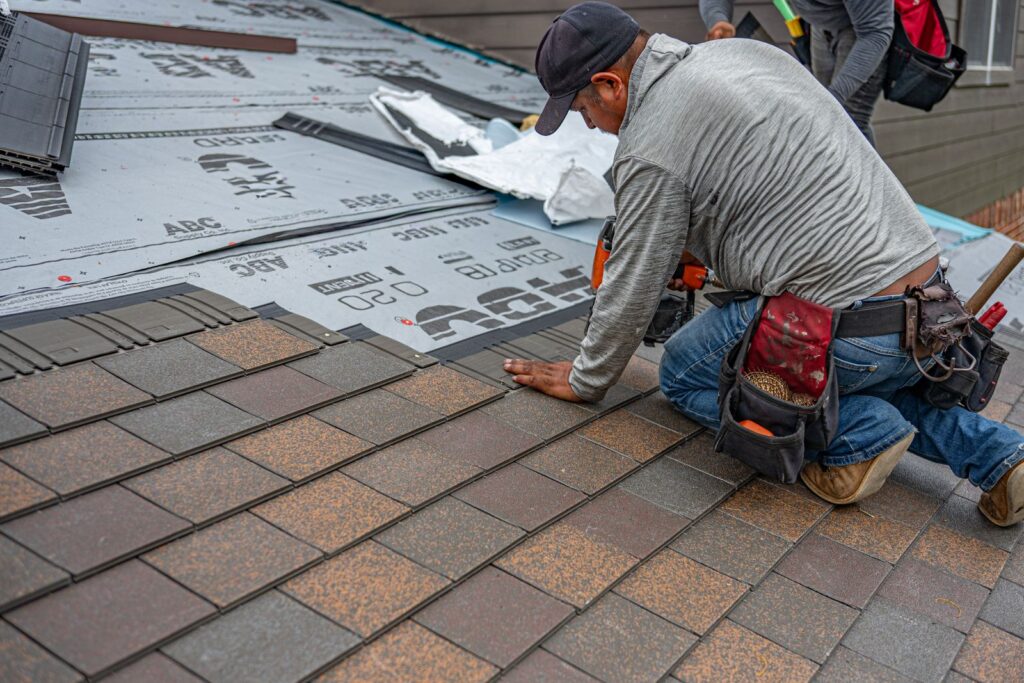
Why a covered claim can still leave a bill
Most homeowners think about a claim in two numbers: the damage estimate and the deductible. After a real storm, a third and fourth number often show up. The first is the cost of work the city requires before it will sign off on the repair. The second is the cost of making the house look like one house again when the replacement shingles, siding, brick, or flooring no longer match what survived.
A standard home policy is built to put the house back the way it was before the loss. It is not built to modernize the house, and it does not promise a perfect color match. Those two ideas collide with how repairs really work in Texas, where older neighborhoods sit next to newer code cycles and popular products get discontinued every few years.
This guide focuses on those two gaps only. If your concern is whether the dwelling limit itself is high enough, start with our guide to checking Coverage A and rebuild costs at renewal. If your concern is how a damaged roof is valued, read roof payment schedules and ACV roof coverage. Ordinance or law and matching sit on top of those decisions.
Part 1: Ordinance or law coverage
What the coverage is for
Ordinance or law coverage pays the increased cost of repairing or rebuilding when a building code, ordinance, or law forces you to do more than simply replace what was damaged. The word “increased” matters. The policy still pays the like-kind repair under your dwelling coverage. Ordinance or law steps in for the difference between that like-kind repair and the code-compliant repair the permit office will accept.
In the national sample homeowners form published by the Insurance Information Institute, this is an additional coverage that lets you use up to 10 percent of the Coverage A limit for these increased costs, and the form says the coverage is additional insurance. Many carriers in Texas file their own forms, so your policy may use a different percentage, a dollar amount, or an optional endorsement. The declarations page and the endorsement list are where you find the real answer.
The three situations it usually addresses
What it usually does not do
- It does not pay for upgrades you choose that the code does not require.
- It does not pay to fix code problems when there was no covered loss. A home that was simply out of date before the storm is not a claim.
- It does not pay for the loss in value of the building caused by a code requirement, in the sample form.
- It does not cover pollution testing or cleanup that a law requires, in the sample form.
- On many policies, the code-upgrade money is paid only once the work is actually done, so you may need to finance part of the job before reimbursement. Ask how your carrier handles that.
How code upgrades show up in real Texas repairs
Many Texas cities adopt versions of the International Residential Code and related electrical and energy codes, and they update on their own schedules. Rules in unincorporated areas can differ from those inside city limits. That is why two houses of the same age on opposite sides of a city line can face very different permit requirements after the same hailstorm.
Common examples homeowners run into
- Roofing: A permit may require new underlayment, drip edge, ice and water barrier in valleys, or full replacement of decking that no longer meets fastening rules. When the roof was last done decades ago, the gap can be large.
- Electrical: Once walls are open after a fire or water loss, an inspector may require updated circuit protection, smoke alarm placement, or wiring that meets the current code in the rooms being repaired.
- Plumbing and HVAC: Replacing a damaged water heater or air handler can trigger venting, pan, or clearance requirements that the old installation never met.
- Windows and exterior walls: Energy or wind rules can change what replacement windows must look like or how they are installed.
- Coastal construction: On the Texas coast, repairs to homes insured through TWIA generally need to meet the applicable windstorm building code and be certified. Our guide to the TWIA windstorm certificate of compliance explains that paperwork.
How much ordinance or law coverage makes sense
There is no single right percentage. The question is how far your home is from current code and how expensive closing that gap would be if a large part of the house had to be rebuilt. Use these factors as a starting point:
| Factor | Points toward a higher limit | Points toward the built-in amount |
|---|---|---|
| Age of home | Older homes, especially those with original wiring, plumbing, or roof structure | Newer homes built under recent code cycles |
| Recent updates | Systems that have not been updated in many years | Recent permitted roof, electrical, and plumbing work |
| Location | Cities that update codes often, coastal wind areas, and floodplains | Areas with lighter permit requirements |
| Type of loss you fear most | Total losses such as fire or tornado, where an entire house must meet code | Mostly partial losses such as a roof claim |
| Construction | Unusual or historic construction that is costly to reproduce | Common tract construction |
Remember that ordinance or law is calculated from your dwelling limit in many policies. If Coverage A is too low, a percentage-based ordinance limit is too low as well. Fix the base first, then size the add-on.
Part 2: Matching after partial damage
The problem in one sentence
When only part of a roof, wall, or floor is damaged, the replacement material may not match the undamaged part, and the question becomes whether the policy pays to replace only the damaged area or enough of the surrounding area to create a uniform look.
Where mismatches come from
- Shingle lines and colors are discontinued, and weathered shingles never match fresh ones exactly.
- Vinyl and fiber cement siding profiles change, and sun fading makes even the same product look different.
- Brick and stone vary by batch and quarry.
- Continuous flooring such as hardwood, tile, or vinyl plank runs from room to room with no natural break.
- Cabinets and countertops may be replaced in one section while the rest stays.
How carriers and regulators approach it
Policy language is the starting point. Some forms say nothing specific about matching, some include endorsements that limit payment to the damaged area only, and some exclude cosmetic damage altogether, which is common for metal roofs and hail. The NAIC model regulation on unfair property and casualty claims practices contains language saying that when replaced items do not match in quality, color, or size, the insurer should replace items in the area to achieve a reasonably uniform appearance. States decide whether and how to adopt model language, so do not assume that standard applies to your Texas policy. Read what your form actually says, and ask your agent how the carrier handles matching in practice.
Matching endorsements and limitations to look for
Texas policies vary widely here, so search the endorsement list on your declarations page for these kinds of titles and phrases:
A matching limitation is not automatically a bad deal. It may come with a lower premium. The point is to know which version you bought, so the outcome after a storm is not a surprise.
Where flood fits: a separate code-upgrade benefit
Home policies generally exclude flood, so ordinance or law on your home policy does not help with a flood loss. The National Flood Insurance Program has its own benefit called Increased Cost of Compliance. According to FEMA, policyholders in high-risk flood areas may receive up to $30,000 to help bring a building into compliance with local floodplain rules after the community declares it substantially damaged, meaning repairs cost 50 percent or more of the building’s pre-damage market value, or repetitively damaged under a local ordinance. The options include elevation, demolition, relocation, and, mostly for non-residential buildings, floodproofing. The ICC claim is adjusted separately from the main flood claim.
If you are weighing government and private flood options, our comparison of private flood insurance vs NFIP is a good next read. Ask any private flood carrier whether it offers a code-compliance benefit, because it is not automatic.
Deductibles, limits, and how the pieces stack
On a large storm claim, several parts of the policy can be in play at once. It helps to picture them in order:
- Dwelling coverage pays the like-kind repair, after the applicable deductible. Wind and hail deductibles are often a percentage in Texas; see Texas wind and hail deductibles explained.
- Ordinance or law pays the code-required increase, up to its own limit, under the terms of the coverage.
- Matching is decided by policy language and any matching endorsement or limitation.
- Detached structures such as fences and sheds follow their own limit; our page on other structures coverage covers that.
- Extended replacement cost, if you have it, can add room above the dwelling limit, but it is a separate feature and not a substitute for ordinance or law.
Keep claim timing in mind as well. Texas has rules for how claims are acknowledged and paid, and for the notice homeowners must give before suing over weather claims. Our article on Texas hail and wind claim deadlines walks through that process.
After a loss: how to protect these benefits
- Get the permit requirements in writing. Ask your contractor to list code-required items separately from like-kind repair items in the estimate. Adjusters handle these lines differently.
- Keep the inspector’s notes. A written correction notice or permit condition is the best evidence that an item is required, not optional.
- Document the undamaged material. Photograph remaining siding, shingles, and flooring, and keep a sample or the product label if you can find it. If a product is discontinued, a supplier letter helps.
- Ask about matching early. Raise it when the adjuster inspects, not after the work is finished.
- Track holdback money. Replacement cost and code-upgrade amounts are often held back until the work is complete. Know the deadlines in your policy for completing repairs and submitting invoices.
- Separate wants from requirements. If you upgrade by choice, such as a better roof product, the extra cost is yours. Keep that line clear so it does not muddy the required items.
Before-you-renew checklist
- Find ordinance or law on your declarations page or form. Is it built in, optional, or missing?
- Note whether the limit is a percentage of Coverage A or a dollar amount, and whether it is additional to Coverage A.
- Ask the price of raising it, for example from the built-in amount to a higher percentage.
- Search the endorsement list for any matching limitation, matching coverage, or cosmetic damage exclusion.
- Ask how the carrier handles discontinued siding and shingles in practice.
- Confirm whether code upgrades are paid only after work is complete.
- If you are in a flood zone, confirm whether your flood policy includes a code-compliance benefit.
- List the age of your roof, wiring, plumbing, and HVAC so the agent can judge the code gap.
- If you are on the coast, make sure past repairs have the windstorm certification paperwork on file.
- Review the dwelling limit first, since many ordinance limits are a percentage of it.
For more questions to bring to your agent, use our list of questions to ask a home insurance agent, and see our Texas homeowners insurance overview for how these endorsements fit into the whole policy.
Landlords and rental homes
Rental dwellings are usually written on dwelling fire forms rather than homeowners forms, and code-upgrade and matching terms can be thinner or absent. If you own a rental, review the same questions on that policy. Our page on the Texas DP-3 special form explains the most common landlord form, and the same checklist above applies.
Check your code-upgrade and matching coverage
Send us your declarations page and the age of your roof and major systems, and we can compare ordinance or law limits and matching terms across carriers before your next renewal.
Sources
- Insurance Information Institute: Sample Homeowners 3 Special Form (Ordinance or Law additional coverage)
- Insurance Information Institute: How much homeowners insurance do I need?
- Insurance Information Institute: Understanding your insurance deductibles
- IRMI glossary: Ordinance or law coverage
- NAIC: Unfair Property/Casualty Claims Settlement Practices Model Regulation
- FEMA: Increased Cost of Compliance coverage
- Texas Department of Insurance: Home insurance guide
- Progressive: What is ordinance or law coverage?
- NerdWallet: Ordinance or law coverage for homeowners
- Insurance Journal: Local governments increase homeowners loss
Get a free Texas home insurance quote
Ready for numbers? Fill out the short form below and a licensed Texas agent will compare carriers for you. It takes about two minutes, there is no obligation, and we never sell your information. Prefer the phone? Call 800-875-4711.