
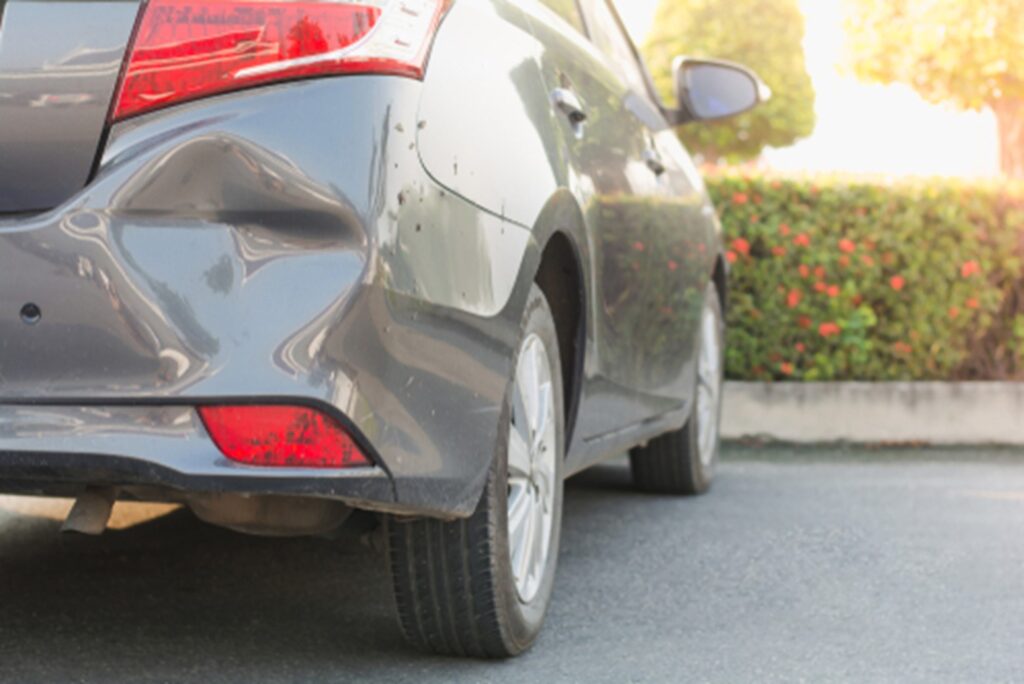
Summary: A hit-and-run accident shouldn’t cause you to have an increase in your auto insurance premium if you aren’t at fault. With that said, some circumstances and carriers may also cause you to pay a higher premium. There are laws in Texas to help mitigate hit-and-runs, however, this doesn’t mean they aren’t a common issue for drivers. You can protect yourself with uninsured/underinsured motorist (UM/UIM) coverage and if you are facing a premium increase due to a hit-and-run, shopping carriers can help you switch and save money. Estimated Read Time: 8 mins
Will a Hit-And-Run Claim Raise My Insurance?
In case of a hit-and-run accident, having appropriate insurance coverage is vital. While Texas law mandates liability insurance, this coverage doesn’t protect vehicle repairs in hit-and-run incidents.
To address this, you’ll need collision coverage or uninsured/underinsured motorist (UM/UIM) property damage coverage, which usually includes hit-and-run damage. UM/UIM coverage often features lower deductibles and may offer rental car reimbursement.
If you don’t have these coverages, consider discussing options with your insurance agent to enhance your protection.
However, if you do need to file a claim due to a hit-and-run, it’s important to understand how your policy and premium are affected. Below, we’re breaking down how drivers in Texas are affected.
Does a Hit and Run Increase Your Insurance?
If you are a victim of a hit-and-run accident, you won’t likely see an increase in your auto insurance premium. However, different carriers may assess risk differently and could raise your rates as a result.
Furthermore, if you decide to file a claim with your collision coverage because the party responsible is never found, you may find yourself paying more in premiums as a result.
It’s important to shop around and read the details of your individual car insurance policy to understand what to expect from your insurer after a hit-and-run.
Hit and Run Accident Laws in Texas
Drivers in Texas have a legal obligation to stop, assist, and exchange contact and insurance information after an accident, even if it involves an unattended vehicle. Failure to do so constitutes a hit-and-run offense.
Despite these laws, hit-and-run crashes are common. A AAA Foundation for Traffic Safety analysis estimated 737,100 hit-and-run crashes nationwide in 2015, about one every 43 seconds, and noted that the 2,049 hit-and-run deaths in 2016 were the highest number ever recorded.
Penalties for hit-and-run accidents vary based on the severity of the damage. Under Transportation Code §550.021, failing to stop after a crash that causes a death is a second-degree felony, and one that causes serious bodily injury is a third-degree felony. Other injury crashes can bring up to five years in prison or up to a year in county jail, plus a fine of up to $5,000. When only vehicles are damaged, §550.022 makes failing to stop a Class C misdemeanor if the damage is under $200, or a Class B misdemeanor if it is $200 or more.
Texas law mandates providing specific information after an accident, including name, address, vehicle details, and insurance information.
Insurance claims can be made against the liable party’s insurance, but if they’re not found or uninsured, UM/UIM motorist coverage applies.
Hit-and-run offenders may face additional charges such as DWI or driving without insurance, exacerbating legal consequences, depending on the circumstances surrounding the accident.
What Should I Do if a Hit and Run Accident Increases My Insurance?
If your auto carrier is looking to apply a hit-and-run insurance increase, you’ll need to shop around to find lower rates.
There are many different factors and methods that go into calculating your premium and you may be able to find a carrier near you offering the same auto insurance for less.
Your best bet is to shop around and compare rates from top-rated car insurance providers in Texas.
Shopping and comparing is key to saving money whether you’re facing an increase from a hit-and-run accident or not. If you’d like to compare options, contact our team or request a quote and compare quotes in your area today.
What to do right after a hit-and-run in Texas
The steps you take in the first hour can decide whether your claim is paid. The Texas Department of Insurance’s auto insurance guide is direct about the most important one: call the police if you were hit by a driver who left the scene, because your uninsured motorist coverage won’t pay for a hit-and-run if you didn’t report it to police.
- Get safe and check for injuries. Call 911 if anyone is hurt.
- Call the police and get the report details. Note the officer’s name and badge number, as TDI suggests, so you can follow up on the report.
- Write down everything about the other vehicle. A partial plate, make, model, color, direction of travel and any damage to the other car can help police find the driver.
- Look for witnesses and cameras. TDI notes that independent witnesses can help prove fault. Nearby businesses, doorbell cameras and dashcams may have footage.
- Photograph the scene. Capture the damage, debris, skid marks, road conditions and the time and location.
- Report the claim to your insurer quickly. TDI points out that most companies have deadlines for filing claims, and you should send a copy of the police report when it is ready.
Which coverage pays after a hit-and-run
Because the at-fault driver is unknown, your own policy usually pays. Which part depends on what you carry:
- Uninsured motorist (UM) coverage. TDI explains that UM coverage pays if you’re in a hit-and-run accident. Insurers must offer it, and you must reject it in writing if you don’t want it. Texas law also requires actual physical contact between the unknown driver’s vehicle and you or your property for a hit-and-run claim under UM coverage (Insurance Code §1952.104). If a driver ran you off the road without touching your car, UM may not apply.
- Collision coverage. It pays to repair your car regardless of fault, minus your deductible. Our page on Texas collision insurance explains how it works.
- Personal injury protection (PIP) or medical payments. These pay medical bills for you and your passengers, regardless of who caused the crash. Our article on no-fault insurance and PIP in Texas explains the difference.
A simple example
Say you come back to your car in a Dallas parking lot and find the rear bumper and quarter panel crushed, with paint from another vehicle on it. Repairs are estimated at $3,200. You call the police and get a report number. If you carry UM property damage coverage, the physical contact requirement is met, and that coverage could pay the repair minus its deductible. If you carry collision instead, it would pay $2,200 with a $1,000 deductible. If the other driver is later identified, your insurer may pursue that driver to recover what it paid, and you may get your deductible back.
Why your premium might still change
Insurers generally raise rates for claims you caused. The Insurance Information Institute explains that insurers may re-evaluate rates after claims or incidents that are primarily your fault, and that a claim above a certain amount for an incident that was primarily your fault can lead to a percentage increase. A hit-and-run where you are clearly the victim generally isn’t treated that way, but practices vary by company. A paid claim also appears in your claims history. You can request your own report from the LexisNexis consumer disclosure portal to see what insurers see.
Filing under collision rather than UM, or having no police report, can make it harder to show you weren’t at fault. That is one more reason to report every hit-and-run promptly.
If the driver is found
When police identify the driver, the claim can shift to that driver’s liability insurance. If your insurer has already paid you, it can seek repayment from the at-fault driver or that driver’s insurer through subrogation. Our guide to subrogation explains how that process works and how deductibles are refunded. If the driver turns out to be uninsured, your UM coverage still applies.
Why UM coverage matters in Texas
The Texas Department of Motor Vehicles estimates that 11.87 percent of Texas drivers were uninsured as of September 2025. Between uninsured drivers and drivers who flee, there are real odds of being hit by someone who can’t or won’t pay. UM coverage is built for exactly these situations, but it only helps if you keep it on your policy.
Common mistakes after a hit-and-run
- Not calling the police. Without a police report, UM coverage won’t pay for a hit-and-run.
- Waiting to report the claim. Insurers have deadlines, and evidence such as video footage can be deleted.
- Chasing the other driver. It is dangerous. Focus on details you can safely note.
- Rejecting UM coverage to save a few dollars. It is the main protection when the other driver can’t be found.
- Assuming a near-miss is covered. Texas UM requires physical contact in hit-and-run cases.
Frequently asked questions
Does a hit-and-run count as an at-fault accident?
Not if you were the victim and can show it, typically with a police report. How each insurer records the claim can vary.
What if my parked car was hit and the driver left?
Report it to the police. Physical contact with your car satisfies the Texas UM requirement, so UM property damage or collision coverage may pay, depending on your policy.
How long do I have to report a hit-and-run?
Report it to the police right away and to your insurer as soon as possible. Policies set their own notice requirements, and delays can hurt your claim.
Sources:
1. Uninsured Motorist Subrogation: Pursuing The Uninsured At-Fault Driver, MWL. Accessed April 2024.
2. Texas Transportation Code Chapter 550 (Accident and Accident Reports / hit-and-run duties), Texas Legislature. Accessed September 2026.
Texas Transportation Code Chapter 550
- Auto insurance guide, Texas Department of Insurance
- Hit-and-Run Crashes: Prevalence, Contributing Factors and Countermeasures, AAA Foundation for Traffic Safety
- Do auto insurance premiums go up after a claim?, Insurance Information Institute (Triple-I)
- Auto insurance basics: understanding your coverage, Insurance Information Institute (Triple-I)
- Tex. Transp. Code §550.021 and §550.022, Texas.Public.Law
- Tex. Ins. Code §1952.104, Uninsured motorist coverage exclusions and physical contact, Texas.Public.Law
- TexasSure – Insurance Verification, Texas Department of Motor Vehicles
- Consumer Disclosure, LexisNexis Risk Solutions
Get a free Texas auto insurance quote
Ready for numbers? Fill out the short form below and a licensed Texas agent will compare carriers for you. It takes about two minutes, there is no obligation, and we never sell your information. Prefer the phone? Call 800-875-4711.
What happens next
- A licensed Texas agent reviews your request.
- We compare carriers for your auto coverage.
- You get options by phone or email, usually the same business day.